Process connections
Follow ten explanatory paths through two columns, a shared decanter, pumps, heat exchangers and separated utility circuits.
 Puviin VarmanApplied AI & automation builderContact
 04 / Working demonstrator · September 2026
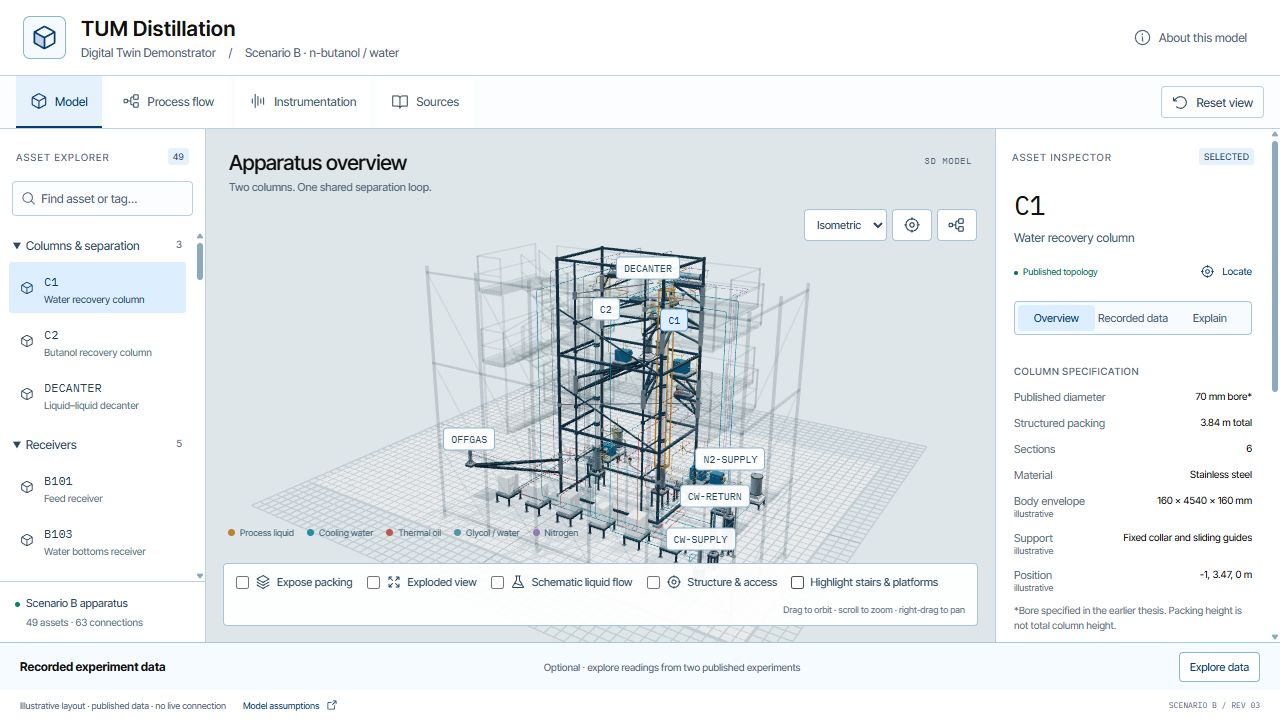
A working 3D engineering visualisation built from a published TUM distillation research case and its recorded experimental data.
 WORKING DEMONSTRATOR · SOURCE-LINKED
The question
The source material describes a two-column n-butanol and water separation process, provides a process diagram and includes recorded operating data. Each source is useful, but understanding how the equipment, streams and measurements relate still requires substantial interpretation.
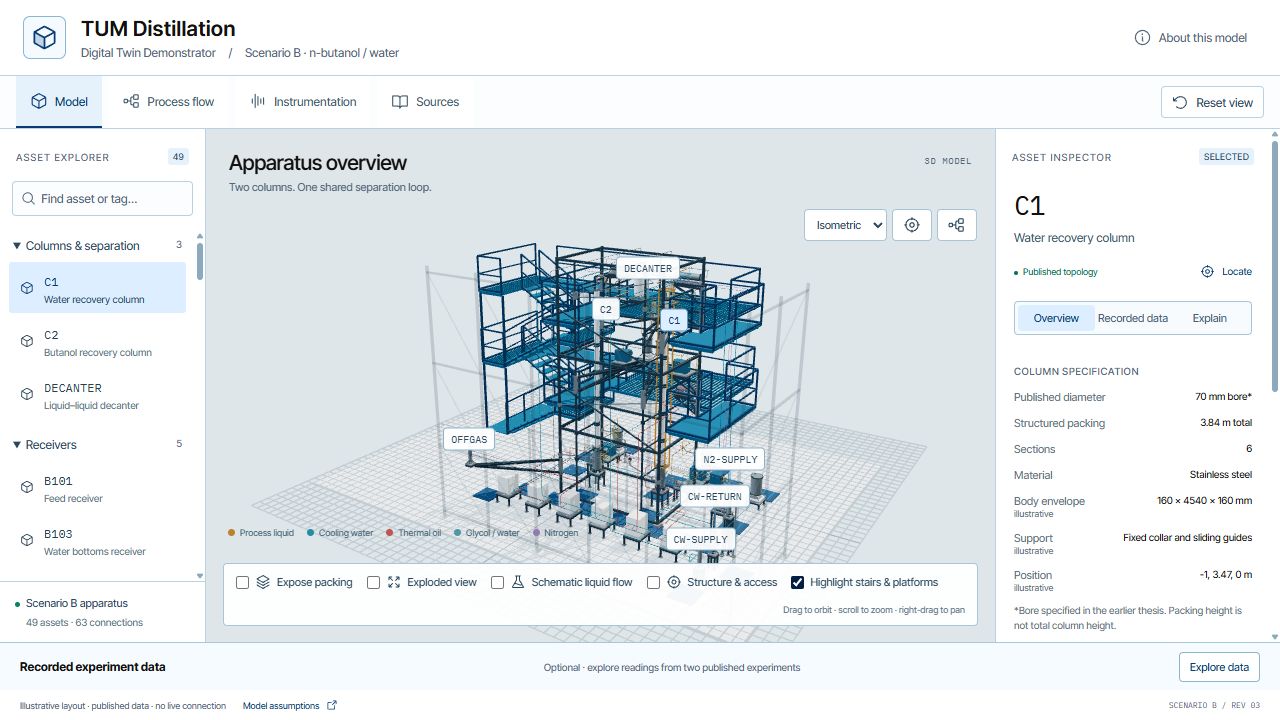
I used an agent-orchestrated workflow to reconcile the sources, build the apparatus, challenge the first reconstruction and repeatedly test its declared connections, bends, supports and access arrangement. Substantiated conflicts were corrected; details the sources could not settle remain visibly unresolved.
Working evidence
What can be determined
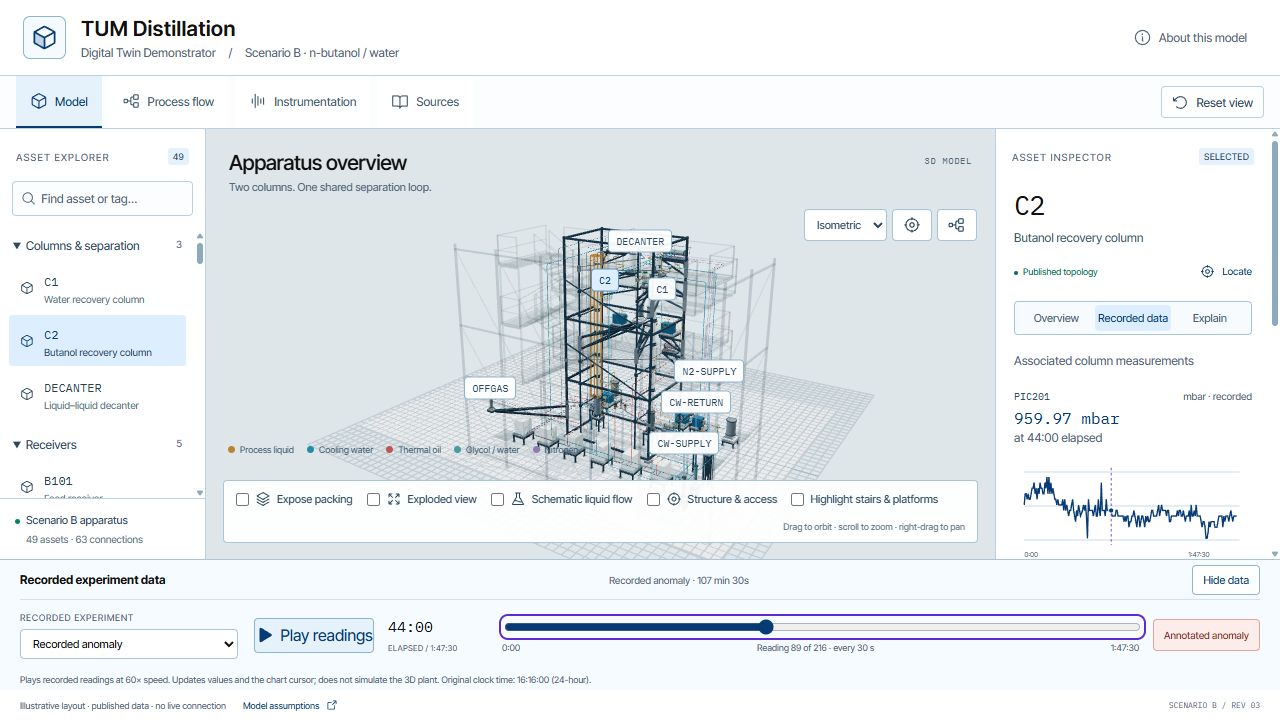
It can show whether represented equipment and connections form a coherent declared topology, where recorded temperature and pressure changed during the supplied experiments, and where the model’s own geometry or access assumptions conflict.
It cannot establish as-built dimensions, structural capacity, hydraulic adequacy, thermal expansion, process safety, code compliance or the operating state of unresolved circuits. Those require verified engineering inputs and discipline review beyond the available sources.
Evidence-linked · human-reviewed