
LinkedIn article9 Aug 2024Written by Puviin Varman
🌍 Highlights from the Third Plenary Session of the Malaysia Carbon Market Forum 🌍 - Plenary 3
Detailed notes from the forum’s third plenary on building high-integrity ASEAN carbon markets, including demand signals, policy, Article 6, trust, and regional capacity.
Original LinkedIn post text
8th August 2024 (Session 3)
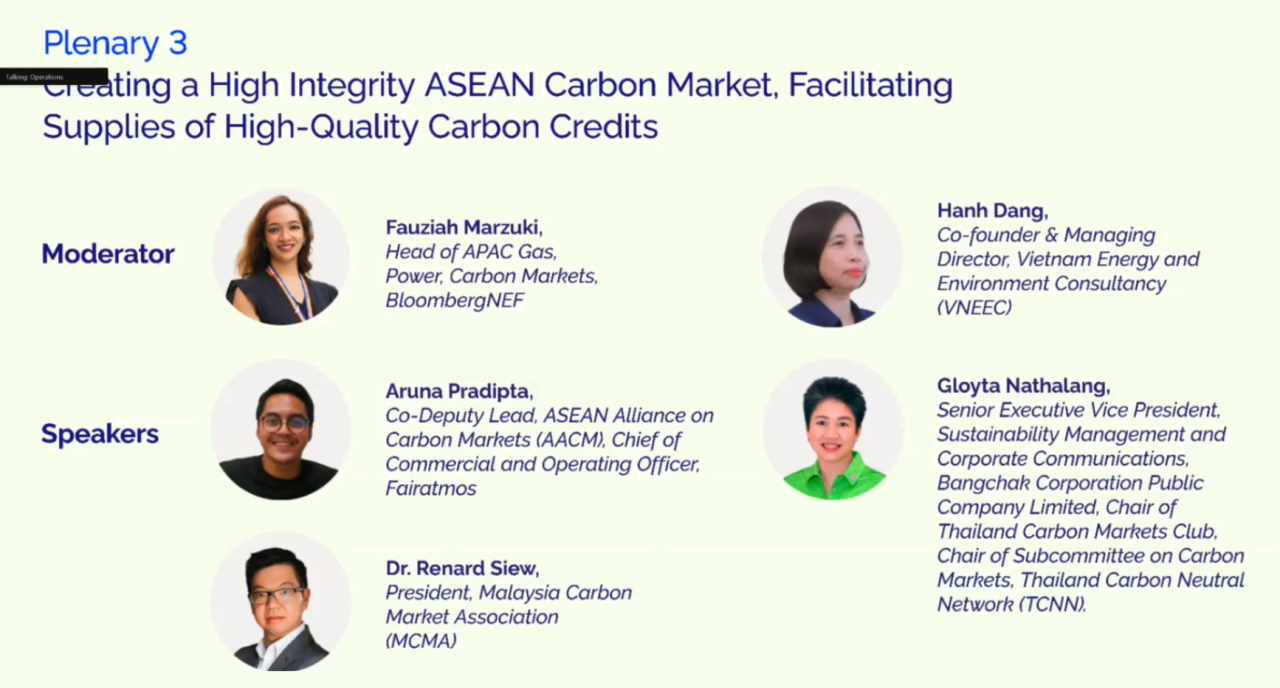
I am thrilled to share key insights from the THIRD plenary session of the Malaysia Carbon Market Forum. This session featured an engaging discussion on "Creating a High Integrity ASEAN Carbon Markey. Facilitating Suplies of High-Quality Carbon Credits"
Session Summary:
The session was moderated by Fauziah Marzuki, Head of APAC Gas, Power, Carbon Markets at BloombergNEF, and included an esteemed panel of experts:
Aruna Pradipta, Co-Deputy Lead, ASEAN Alliance on Carbon Markets (AACM), Chief of Commercial and Operating Officer, Fairatmos
Dr Renard Siew, President, Malaysia Carbon Market Association (MCMA)
Dang Hanh, Co-Founder & Managing Director, Vietnam Energy and Environment Consultancy (VNEEC)
Gloyta Nathalang, Senior Executive Vice President, Sustainability Management and Corporate Communications, Bangchak Corporation Public Company Limited, Chair of Thailand Carbon Markets Club
Key Highlights:
🔹 Challenges in High-Quality Credits and Carbon Markets: The panel discussed the barriers to creating high-quality credits and high-integrity carbon markets in the ASEAN region. Key issues include:
Lack of Clear Demand Signals: Without strong demand signals, there is limited incentive for project developers. As Gloyta Nathalang noted, Thailand has 717 million tonnes of carbon credits available, but the market is still predominantly a buyer's market.
Policy Support and Incentives: Insufficient policy frameworks and lack of incentives hinder investment and market development. Aruna Pradipta highlighted that the absence of clear and supportive policies makes it difficult to drive investments in carbon projects.
Knowledge Gaps: Many potential market participants lack understanding of carbon market mechanisms and project development requirements. Dr. Renard Siew mentioned the need for capacity building and knowledge sharing to address these gaps.
🔹 Thailand's Experience: Gloyta Nathalang shared insights from Thailand’s carbon market, which began in 2012 but gained momentum after the Prime Minister’s net zero target announcement at COP26. Thailand's current focus includes:
Domestic Initiatives: Establishing the Thailand Carbon Neutral Network and developing Tiva credits for international recognition. Gloyta mentioned that Thailand is working towards achieving cross-border recognition of its credits to enhance market liquidity.
Carbon Market Club: Promoting collaboration among market participants to drive forward the carbon agenda. Gloyta emphasized the importance of having a unified approach to address the climate crisis and achieve net zero targets.
🔹 Indonesia's Progress: Aruna Pradipta highlighted Indonesia’s strides with the launch of its own carbon exchange and development of methodologies tailored to local conditions. Key points include:
Results-Based Payments: Indonesia received over USD 400 million in international compensation through results-based payments in the forestry sector. This approach engages thousands of stakeholders and demonstrates effective climate action.
Future Plans: Ongoing efforts to develop a comprehensive Emissions Trading Scheme (ETS) and integrate voluntary approaches within the compliance framework. Aruna mentioned that Indonesia is continuously working on establishing more methodologies to support project developers.
🔹 Malaysia's Ambitions: Dr. Renard Siew discussed Malaysia’s development of its national carbon market policy, aiming to create a hybrid system combining ETS and carbon tax by 2025. Key initiatives include:
Malaysian Carbon Market Association (MCMA): Formed to support policy development, capacity building, and regional collaboration. Dr. Renard shared that the MCMA aims to advocate for a vibrant voluntary carbon market ecosystem and provide a unified voice for national policy developments.
Policy Development: Studies supported by the World Bank are underway to finalize the policy framework. Malaysia aims to develop a hybrid system where both ETS and carbon tax could coexist, initially focusing on specific sectors before expanding.
🔹 Vietnam's Developments: Hanh Dang shared that Vietnam is finalizing its legal framework for domestic carbon markets, including compliance and voluntary markets. The regulation is expected to be completed by the end of this year. Hanh emphasized the importance of learning from neighboring countries to develop effective policies and frameworks.
🔹 Regional Collaboration: The panel emphasized the importance of ASEAN collaboration in establishing a robust carbon market. Key points include:
Mutual Recognition of Methodologies: Developing a common set of standards across ASEAN to expedite market development. Dr. Renard Siew noted that mutual recognition of national registries and methodologies would reduce costs and enhance market efficiency.
ASEAN Common Carbon Framework (ACCF): Proposing a framework for regional collaboration, including shared validation and verification bodies. Aruna Pradipta highlighted the potential of creating a pool of ASEAN validators and verifiers to build capacity and ensure high-quality standards.
Interesting Facts:
📌 ASEAN Day: August 8th is celebrated as ASEAN Day, marking the founding of the Association of Southeast Asian Nations (ASEAN) in 1967. This set a collaborative tone for the session.
📌 Technological Advancements: The panel highlighted advancements in satellite imaging, drone technology, and remote sensing, which are improving the accuracy and reliability of carbon crediting methodologies. These technologies help ensure that the carbon reductions claimed by projects are real and verifiable.
📌 Regional Market Dynamics: ASEAN countries are both buyers and sellers in the carbon market, providing a unique opportunity for regional collaboration and market integration. The diverse market dynamics within ASEAN present opportunities for cross-border carbon trading and mutual recognition of credits.
📌 Challenges and Opportunities: Addressing greenwashing, ensuring transparency, and building trust are critical for the success of carbon markets. The panel discussed the importance of robust governance mechanisms and stakeholder engagement. Dr. Renard Siew mentioned the need to fight misinformation and disinformation to build a trustworthy market.
🔹 Positive Developments and Future Goals:
Thailand: Thailand is working towards drafting a Climate Change Act, aiming to transition towards a compliance market within three to five years. Gloyta Nathalang mentioned that Thailand has already developed local carbon credits and is now focusing on achieving international recognition for its premium Tiva credits.
Indonesia: Indonesia is continuously working on developing more methodologies relevant to project developers and exploring mutual recognition models for methodologies.
Vietnam: Vietnam is finalizing its legal framework for domestic carbon markets, including the regulation of compliance and voluntary markets, which is expected to be completed by the end of the year.
Malaysia: Dr. Renard Siew shared the formation of the Malaysian Carbon Market Association (MCMA) to support policy development, capacity building, and regional collaboration. The MCMA aims to advocate for a vibrant voluntary carbon market ecosystem and provide a unified voice for national policy developments.
Key Takeaways:
Integration and Collaboration: Effective integration of voluntary and compliance carbon markets is essential for scaling climate change abatement efforts. Aruna Pradipta emphasized that ASEAN countries must work together to create a harmonized carbon market.
Building Trust: Addressing greenwashing and improving transparency are vital for building trust in carbon markets. Dr. Renard Siew stressed the importance of fighting misinformation and ensuring high standards to build market confidence.
Capacity Building: Investing in capacity building, knowledge sharing, and policy support is crucial for developing robust carbon markets in the ASEAN region. Hanh Dang highlighted the need for regional cooperation to build capacity and develop effective policies.
I look forward to sharing more updates from the subsequent sessions. Stay tuned!
Photo of Plenary Session 3
#MalaysiaCarbonMarketForum #Sustainability #CarbonMarket #ASEAN #ClimateAction #Article6 #VoluntaryCarbonMarket #ComplianceMarkets #BCX