
project and event reflection8mo Edited at archive captureWritten by Puviin Varman
He who tries but fails, learns but he who never tries always fails to learn
A build log from the Bank Negara Malaysia regulatory-document challenge: a working n8n and Supabase prototype that placed third.
Original LinkedIn post text
He who tries but fails, learns but he who never tries always fails to learn
.
.
But this isn't a sad story, this time the clueless got somewhere :-)
.
A continuation from my post a few weeks ago,
After the prompt injection event, I came across another event by AI Tinkerers — a hackathon hosted for Bank Negara Malaysia. The challenge?
>>>Help them manage and update their massive database of regulatory documents.
I was stoked, I wanted to force myself to work on a problem (and speed up my learning), therefore I joined immediately. It was my first programming hackathon ever so I was nervous, confused and excited all at the same time.
Looking back, the task sounds simple (however it was not so at the time):
1. Identify changes in new policy documents vs old ones.
2. Analyse the impact of those changes.
3. Advise how internal docs of the bank need to be updated to stay compliant.
I sort of knew that this could be built out on n8n but honestly, it was guess work at that stage. I wasn’t sure because I had’nt been able to build much at that stage. Joseph connected me to two amazing teammates: Nicholas and Swaroop.
The start was rough. n8n back then (late 2024) was quite buggy, and resources were limited. However after a couple weeks of work, countless iterations, late-night debugging, many discussions and advice from our mentor Joseph. Not forgetting a generous USD $100 in tokens also from Lord King Sir Joseph 🙏- we started to get somewhere
FYI:- before you ask, ALWAYS look for recursions in your workflow while testing, to avoid losing an obsene amount of tokens.
Lesson learnt: AI compute is not cheap. Always optimise and track token usage.
Finally, we managed to build a working prototype:
- A vector database using Supabase of all existing policy docs.
- A workflow to compare new uploads against the database.
- Smart prompting to assign an impact score + advice on what to update.
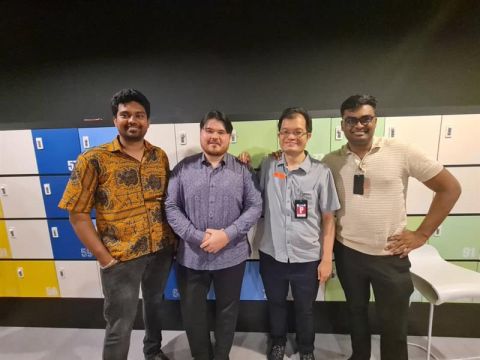
After polishing and adding features, we submitted, presented — and to our surprise, we placed THIRD!
(I'll drop the workflow we used here below)
When architecting solutions I learnt something really important:
Good doesn't always have to be complex and complex isnt necessarily good. Always start by targeting to solve your main problem, sometimes your solution only needs one branch instead of 10.
But the bigger takeaway was this: building something that solved a real problem cemented my belief that AI can meaningfully change how we work.
This WAS just the start. I’ll be sharing more builds from the past couple of years soon, hopefully it inspires someone out there to try creating something of their own.
#2025IsTheBestYearToBuild 🚀